
In today’s hospitality industry, guest expectations are higher than ever. A single negative experience can impact online reviews, reduce guest loyalty, and damage a hotel’s reputation. While guest feedback surveys and internal inspections provide valuable information, they often fail to capture the real guest experience as it happens.
This is where Hotel Mystery Audits play a critical role.
Hotel Mystery Audits provide hospitality brands with an independent and objective evaluation of the guest journey, helping hotels identify service gaps, improve operational performance, and maintain consistent brand standards. Whether you’re managing a luxury resort, boutique hotel, or international hotel chain, mystery audits offer valuable insights that help elevate the guest experience and drive continuous improvement.
To understand the complete evaluation process, explore our Hotel Mystery Shopping Services: Complete Guide for Hotels in 2026.
What is a Hotel Mystery Audit?
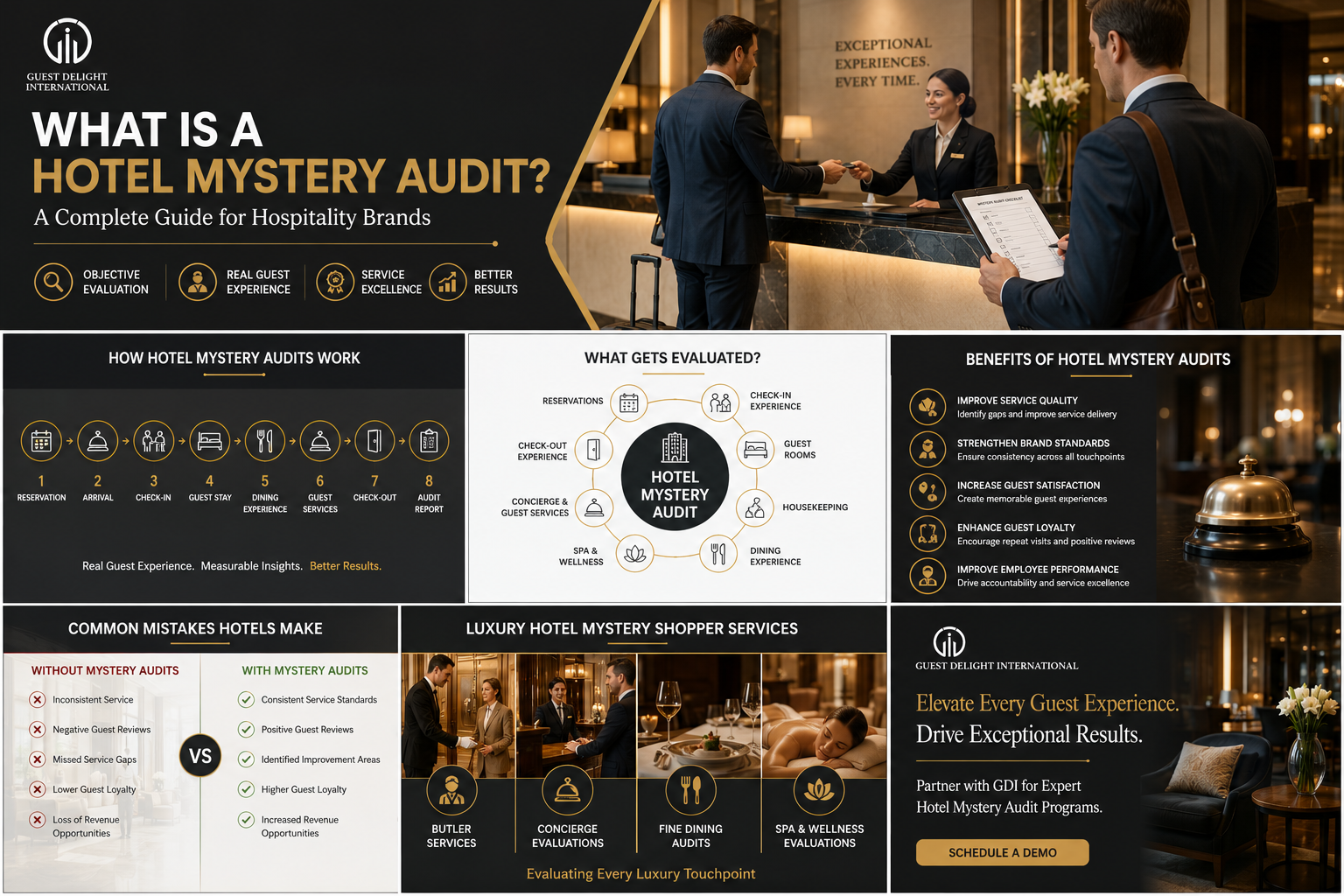
A Hotel Mystery Audit is a structured assessment conducted by trained mystery guests who anonymously evaluate a hotel’s services, facilities, and overall guest experience. Unlike traditional inspections, mystery auditors experience the property exactly as a paying guest would, providing a realistic view of how service standards are delivered in practice.
The purpose of a Hotel Mystery Audit is to measure service quality, operational consistency, employee performance, and guest satisfaction across every stage of the guest journey.
These evaluations help hospitality brands understand whether their service standards are being consistently implemented and whether guests are receiving the experience the brand promises.
Learn how Mystery Shopping Services differ from Hotel Mystery Audits and when each approach is most effective.
Hotel Mystery Audits are commonly used by:
- Luxury Hotels
- Five-Star Resorts
- Boutique Hotels
- Hotel Management Companies
- International Hotel Chains
- Hospitality Groups
- Wellness Resorts
Through detailed Mystery Guest Evaluations, hotels gain actionable insights that support operational excellence and long-term business success.
Hotels selecting an audit provider should also understand how to choose the right Hotel Mystery Shop Company.
How Hotel Mystery Audits Work
Hotel Mystery Audits are designed to replicate the experience of a typical guest while capturing detailed observations throughout the stay.
The process begins with defining audit objectives and evaluation criteria. Hospitality brands identify the standards they want assessed, and customized evaluation frameworks are developed based on their operational goals.
A trained mystery guest is then assigned to complete the evaluation. The auditor makes a reservation, checks into the hotel, uses the property’s facilities, interacts with staff, and experiences services exactly as a normal guest would.
Throughout the stay, the mystery guest records observations related to service quality, employee interactions, operational efficiency, cleanliness, facility standards, and overall guest satisfaction as part of Luxury Hotel Mystery Shopper Services.
Following the evaluation, a detailed report is prepared outlining strengths, weaknesses, opportunities for improvement, and recommendations that help management improve performance.
This process allows hotels to obtain unbiased insights into the actual guest experience rather than relying solely on internal assessments or guest surveys.
Every evaluation follows a structured framework similar to a comprehensive Hotel Mystery Audit Checklist used by leading hospitality brands.
What Gets Evaluated During a Hotel Mystery Audit?
One of the greatest advantages of Mystery Audit Programs is their ability to evaluate the entire guest journey.
Reservation Experience
The guest experience begins long before arrival. Mystery auditors evaluate the booking process to determine how effectively reservations are handled.
Areas assessed include:
- Reservation accuracy
- Response times
- Telephone etiquette
- Product knowledge
- Upselling effectiveness
Pre-Arrival Communication
Hotels are increasingly expected to engage guests before arrival.
Evaluations may include:
- Confirmation communications
- Guest inquiries
- Special request handling
- Personalization efforts
Arrival and Check-In
First impressions significantly influence guest satisfaction.
Auditors assess:
- Arrival experience
- Guest recognition
- Check-in efficiency
- Staff professionalism
- Welcome procedures
Guest Room Quality
Accommodation standards are a major focus of Hotel Mystery Audits.
Assessments include:
- Room cleanliness
- Maintenance quality
- Amenities
- Presentation standards
- Comfort and functionality
Food and Beverage Operations
Dining experiences are critical to guest satisfaction.
Mystery guests evaluate:
- Restaurant service
- Food quality
- Beverage service
- Staff engagement
- Dining atmosphere
Hotels that also conduct Ecosure Mystery Audits can combine food safety assessments with independent guest experience evaluations for a more comprehensive quality assurance programme.
Compare yourself, Learn More: Ecosure Mystery Audits vs Independent Hotel Mystery Audits
Concierge and Guest Services
Guest assistance services are evaluated to determine responsiveness and professionalism.
Areas assessed include:
- Concierge effectiveness
- Guest request handling
- Local recommendations
- Service recovery procedures
Learn how Hotel Mystery Guest Programs differ from Ecosure Mystery Shopper evaluations.
Check-Out Experience
The final guest interaction is equally important.
Auditors assess:
- Billing accuracy
- Efficiency
- Professionalism
- Guest appreciation efforts
Benefits of Hotel Mystery Audits
Hotel Mystery Audits provide valuable insights that support both operational improvements and guest satisfaction.
Improve Service Quality
Mystery audits reveal inconsistencies in service delivery and identify opportunities for staff development and process improvements.
Strengthen Brand Standards
Hospitality brands rely on consistent guest experiences. Mystery audits help ensure brand standards are implemented across every department and location.
Enhance Guest Satisfaction
By identifying and addressing service gaps, hotels can create better guest experiences that lead to higher satisfaction scores and positive reviews.
Discover how independent evaluations improve Guest Satisfaction Scores across the complete guest journey.
Increase Guest Loyalty
Guests are more likely to return to hotels that consistently exceed expectations. Mystery Guest Evaluations help hospitality brands improve guest retention and loyalty.
Improving loyalty also contributes directly to the ROI of Hotel Mystery Shopping Services.
Improve Employee Performance
Audits provide valuable insights into employee behavior, professionalism, and service delivery, helping management develop targeted training programs.
Support Operational Excellence
Detailed evaluations help hotels identify inefficiencies, improve processes, and strengthen overall operational performance.
Hotel Mystery Audit Process
A successful Hotel Mystery Audit Program follows a structured methodology designed to deliver accurate and actionable insights.
Step 1: Define Audit Objectives
The process begins by identifying key service standards, operational priorities, and evaluation goals.
Step 2: Develop Evaluation Criteria
Customized audit criteria are created based on brand standards and guest expectations.
Step 3: Assign a Mystery Guest
An experienced auditor is selected to conduct the evaluation.
Step 4: Conduct the Evaluation
The mystery guest completes the stay and assesses all relevant service touchpoints.
Step 5: Analyze Findings
Observations are reviewed and compiled into a detailed performance report.
Step 6: Implement Improvements
Management teams use findings to improve service delivery and operational performance.
Step 7: Conduct Follow-Up Assessments
Regular Mystery Audit Programs help monitor progress and maintain standards over time.
Common Mistakes Hotels Make
Many hospitality organizations invest heavily in facilities and marketing but overlook critical guest experience issues that affect satisfaction and loyalty.
Some of the most common issues identified through Hotel Mystery Audits include:
Hotels can reduce these issues through structured Hotel Mystery Shopping Services that identify operational gaps before they affect real guests.
Inconsistent Service Standards
Guests often receive different experiences depending on the employee, department, or shift.
Lack of Personalization
Modern travelers expect personalized service and recognition.
Poor Service Recovery
Failure to effectively resolve guest concerns can significantly impact satisfaction and online reviews.
Communication Gaps
Poor coordination between departments often creates friction in the guest journey.
Missed Upselling Opportunities
Many hotels fail to maximize revenue opportunities through effective guest engagement.
Over-Reliance on Guest Surveys
Guest surveys only capture feedback from guests who choose to respond. Mystery Guest Evaluations provide a more complete picture of the actual guest experience.
Hotels operating internationally may also benefit from location-specific mystery shopping programmes.
Final Thoughts
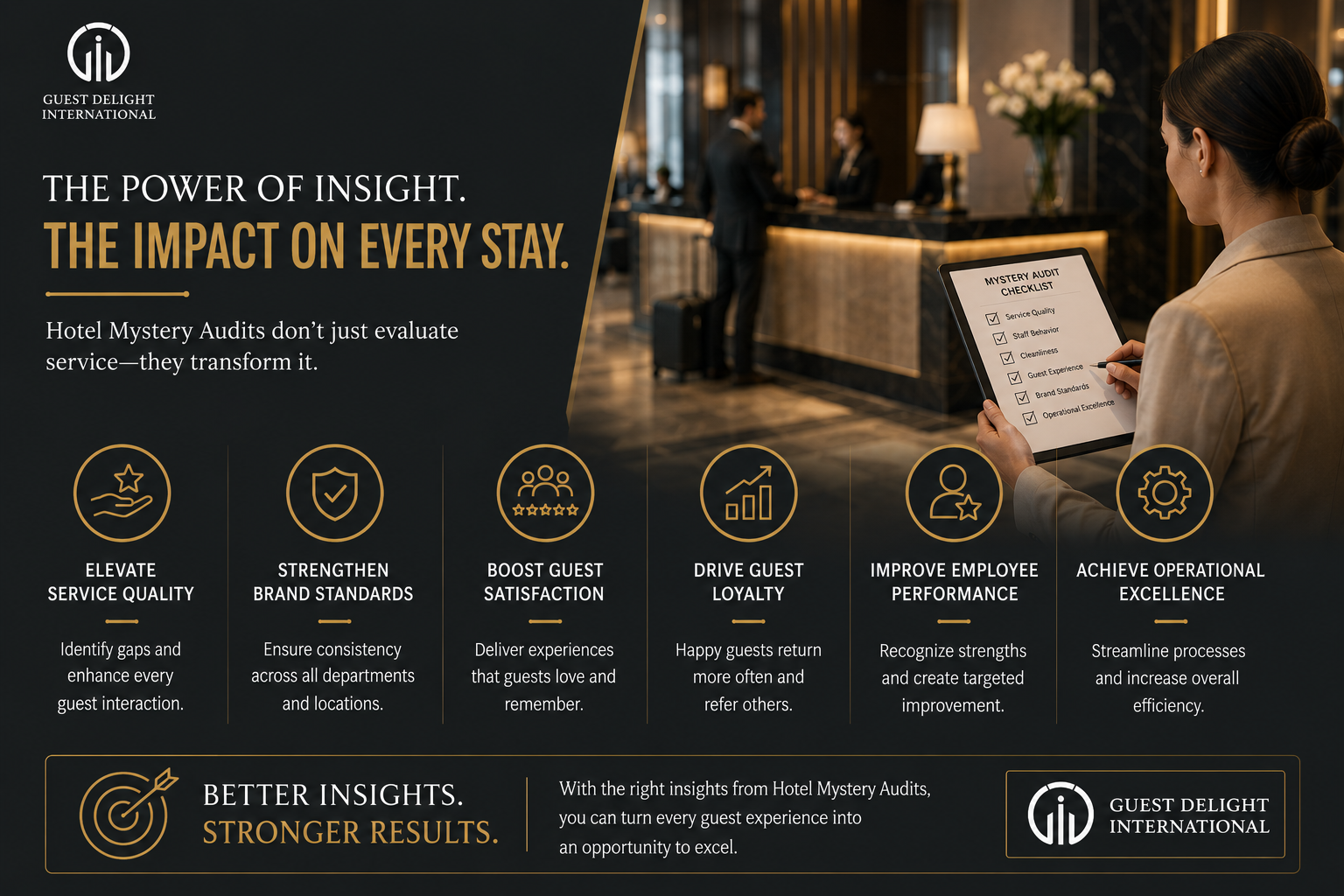
Hotel Mystery Audits are one of the most effective tools available for evaluating guest experiences, improving service quality, and maintaining operational excellence. By viewing a property through the eyes of a real guest, Guest Delight International helps hospitality brands gain valuable insights that support continuous improvement and long-term success.
Whether you operate a luxury resort, boutique hotel, or international hospitality group, implementing regular Mystery Audit Programs can help strengthen brand standards, improve guest satisfaction, increase loyalty, and ensure that every guest experience reflects the quality and values of your brand.